







We have much more to do and your continued support is needed now more than ever.
Twelve Native Milkweeds for Monarchs
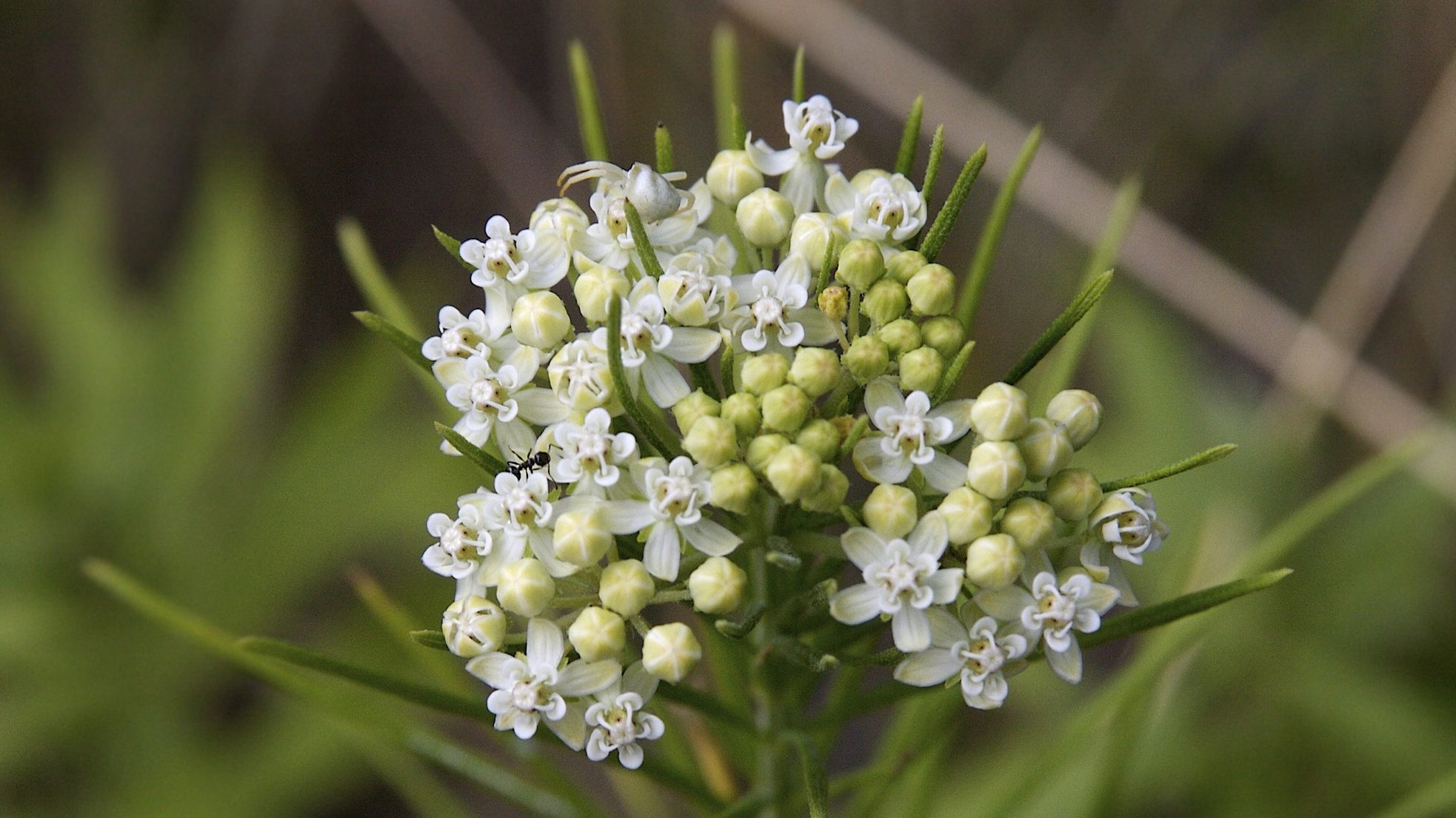
Whorled Milkweed. Dan Mullen, Flickr Creative Commons
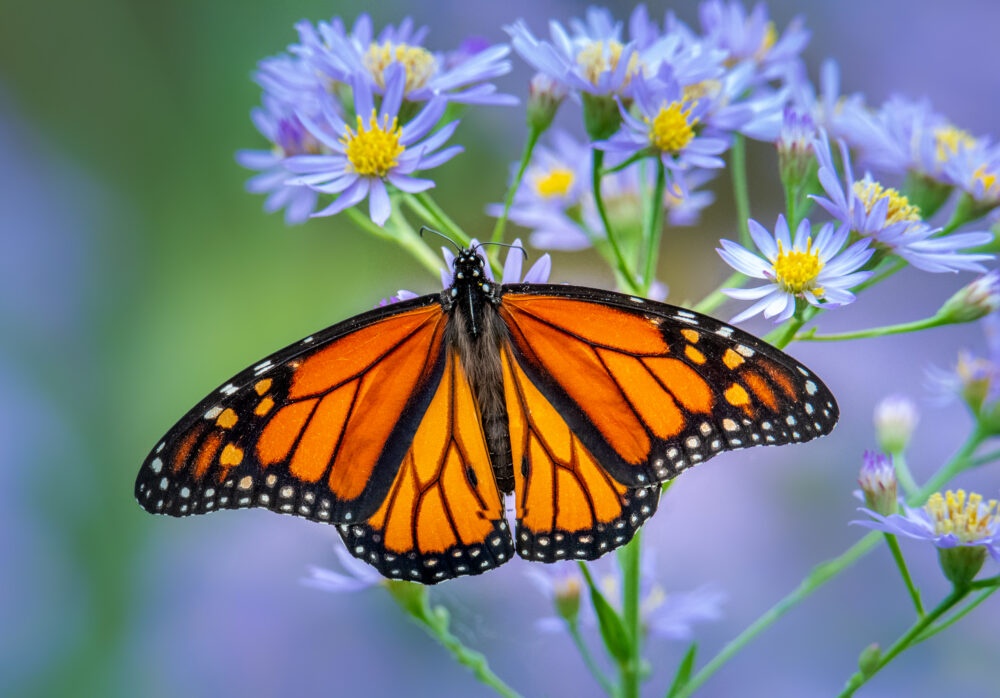
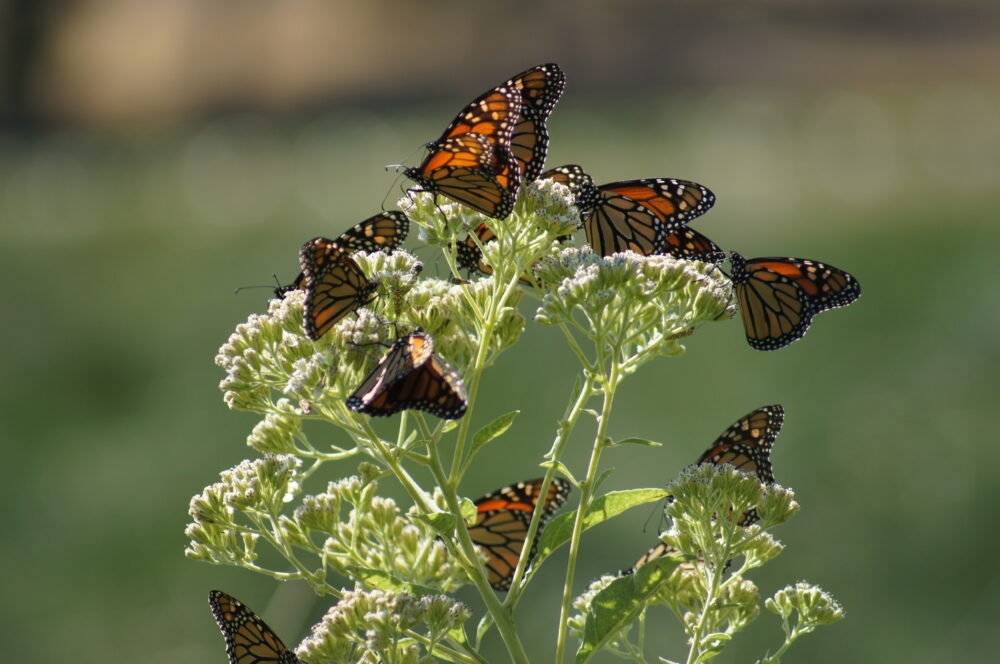
The monarch butterfly population in North America has plummeted in just the last few decades. Destruction of America’s grasslands ecosystems, commercial agricultural practices and even conventional gardening have all contributed to the precipitous decline of this iconic species. National Wildlife Federation has launched a comprehensive campaign to help save the monarch, and there are many ways you can get involved.
One of the biggest factors in monarch decline is the increasing scarcity of its only caterpillar host plant: milkweed. Without milkweed, monarchs can’t successfully reproduce and the species declines. By planting milkweed in your own garden, landscape and throughout your community, you can help reverse the fortune of these beautiful insects.

There are over 70 milkweed species native to North America. Meet twelve of the most ornamental native ones. No matter where you live, there’s at least one species of milkweed native to your area. Make it a goal to add a patch of native milkweed to help the monarchs.
Common Milkweed (Asclepias syriaca)
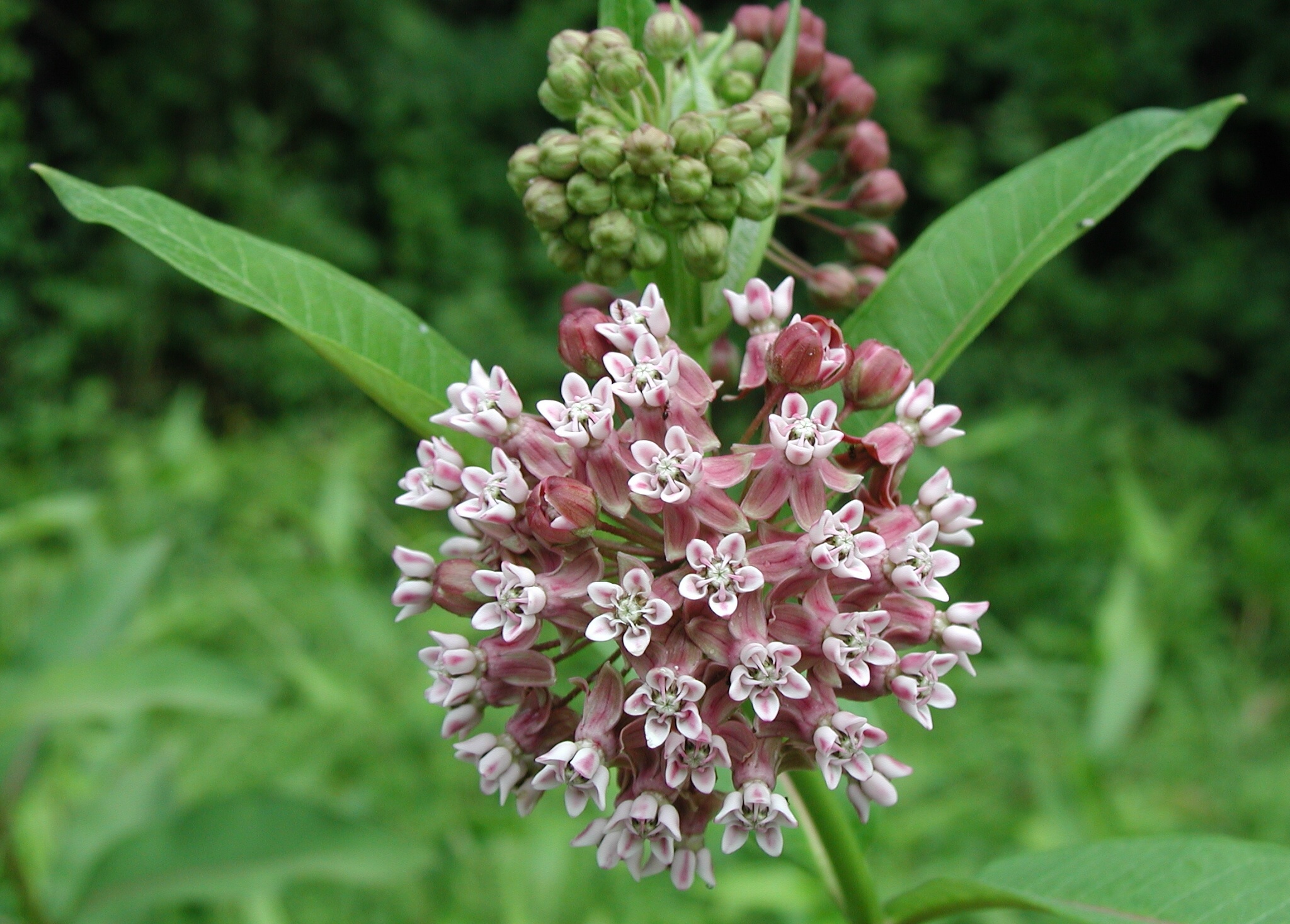
Native Range: AL, AR, CT, DC, DE, GA, IA, IL, IN, KS, KY, LA, MA, MD, ME, MI, MN, MO, MS, MT, NC, ND, NE, NH, NJ, NY, OH, OK, OR, PA, RI, SC, SD, TN, TX, VA, VT, WI, WV. See USDA Plants map for county-level occurrence of the species.
Description: This tall perennial has large balls of pink or purplish flowers that have an attractive odor. The flowers bloom from June to August.
Growing Conditions: Shade intolerant, needs lots of sunlight, moist soil
Plant Size: Usually 3-5 feet (90-150 cm), sometimes reaching 8 feet (240 cm) in ditches and gardens
Butterflyweed (Asclepias tuberosa)
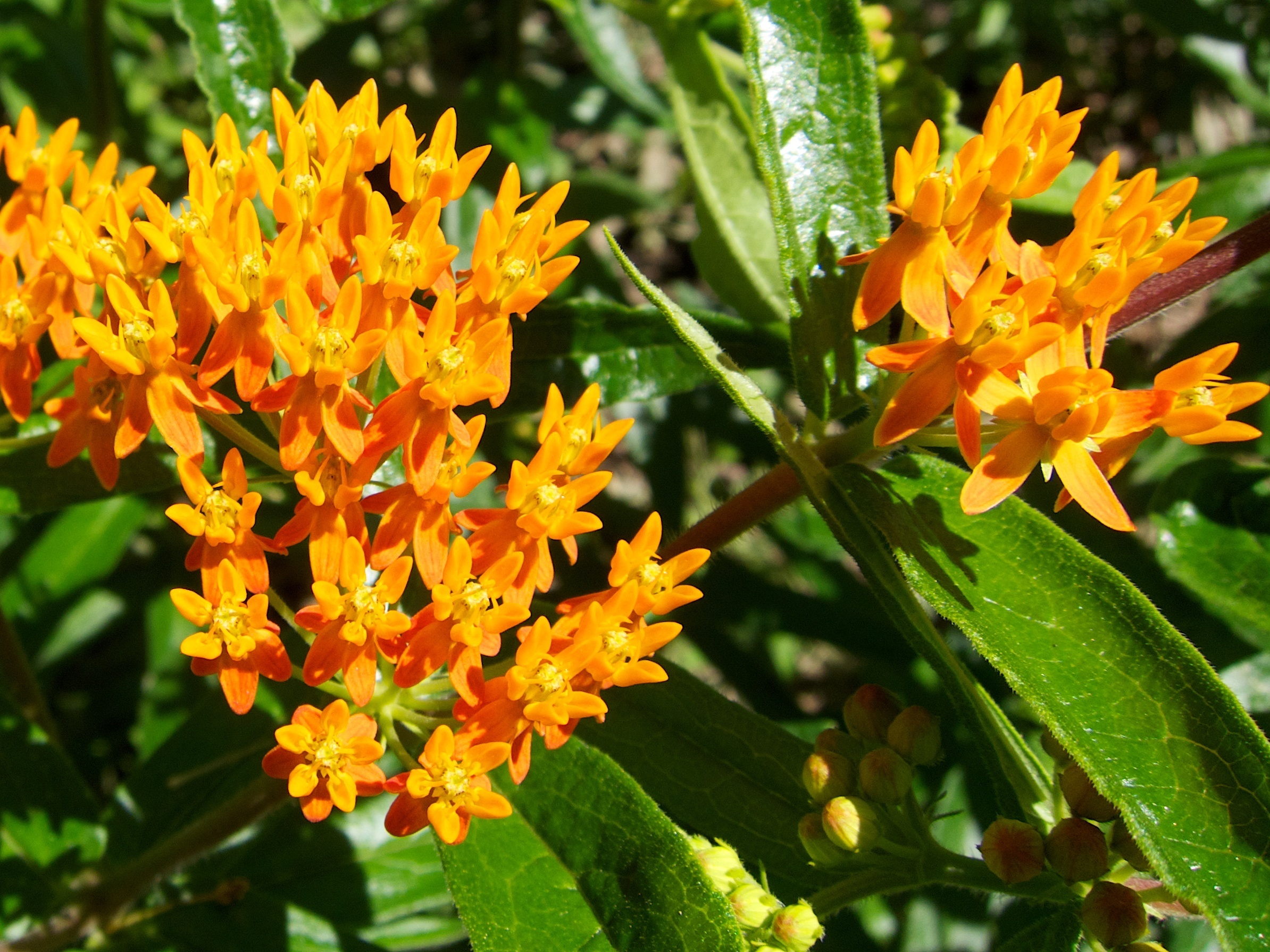
Native Range: AL, AR, AZ, CA, CO, CT, DC, DE, FL, GA, IA, IL, IN, KS, KY, LA, MA, MD, ME, MI, MN, MO, MS, NC, NE, NH, NJ, NM, NY, OH, OK, PA, RI, SC, SD, TN, TX, UT, VA, VT, WI, WV. See USDA Plants map for county-level occurrence of the species.
Description: Sometimes called orange milkweed, this perennial has large, flat-topped clusters of yellow-orange or bright-orange flowers and blooms May to September.
Growing Conditions: Needs sunlight, drought tolerant, dry or moist soil
Plant Size: 1-2 ft (30-60 cm)
Swamp Milkweed (Asclepias incarnata)
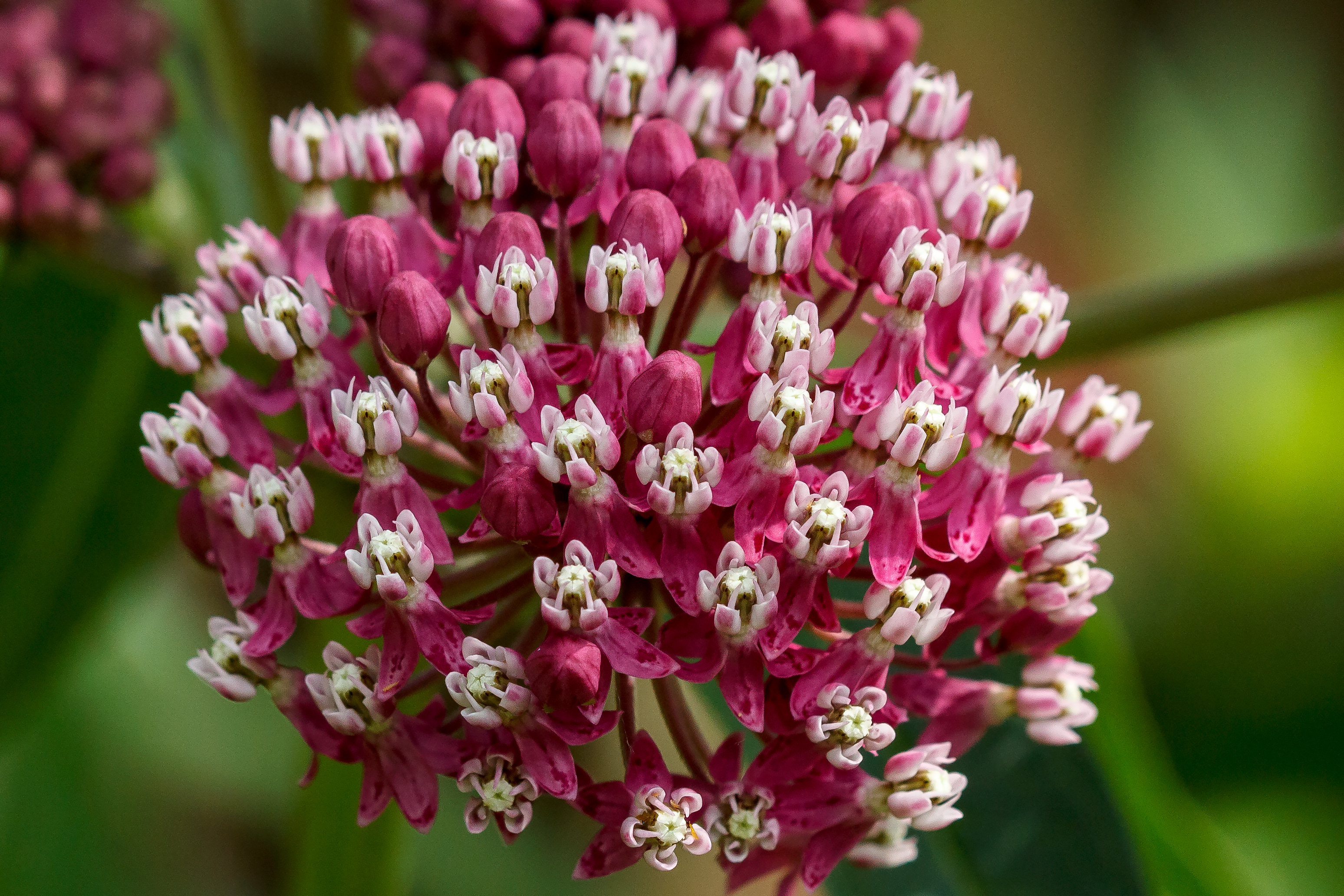
Native Range: AL, AR, CO, CT, DC, DE, FL, GA, IA, ID, IL, IN, KS, KY, LA, MA, MD, ME, MI, MN, MO, MT, NC, ND, NE, NH, NJ, NM, NV, NY, OH, OK, PA, RI, SC, SD, TN, TX, UT, VA, VT, WI, WV, WY. See USDA Plants map for county-level occurrence of the species.
Description: Also known as pink milkweed, this perennial has large blossoms composed of small, rose-purple flowers. The deep pink flowers are clustered at the top of a tall, branching stem and bloom June to October.
Growing Conditions: Needs lots of water, shade tolerant, moist to wet soil
Plant Size: 2-5 ft (60-152 cm)
Antelope-horns or Spider Milkweed (Asclepias asperula)
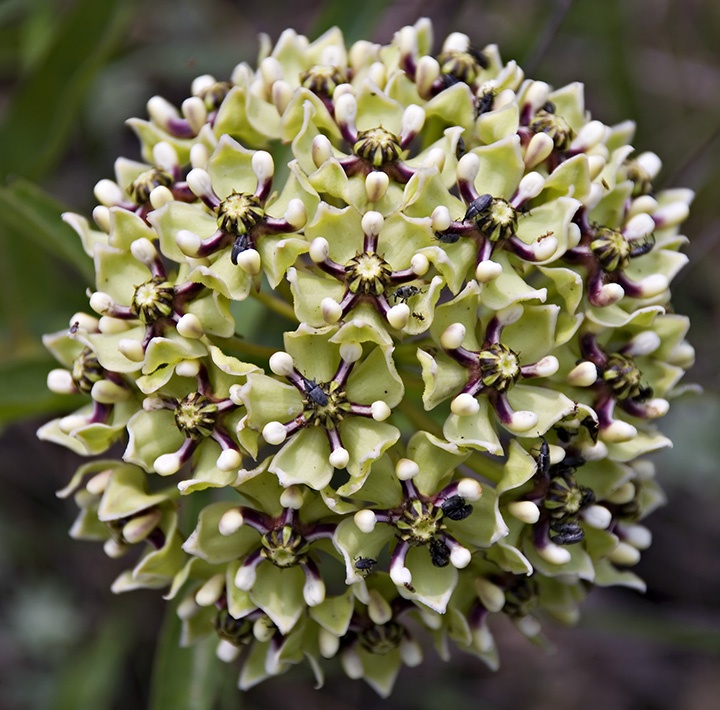
Native Range: AZ, CA, CO, ID, KS, NE, NM, NV, OK, TX, UT. See USDA Plants map for county-level occurrence of the species.
Description: Also known as spider milkweed, this perennial is clump-forming with stems that are densely covered with minute hairs. As the green seed pods grow, they curve to resemble antelope horns. It has pale, greenish-yellow flowers, tinged maroon that bloom March to October.
Growing Conditions: Needs sunlight, dry or moist soil, medium water use
Plant Size: 1-2 ft (30-60 cm) tall
Purple Milkweed (Asclepias purpurascens)
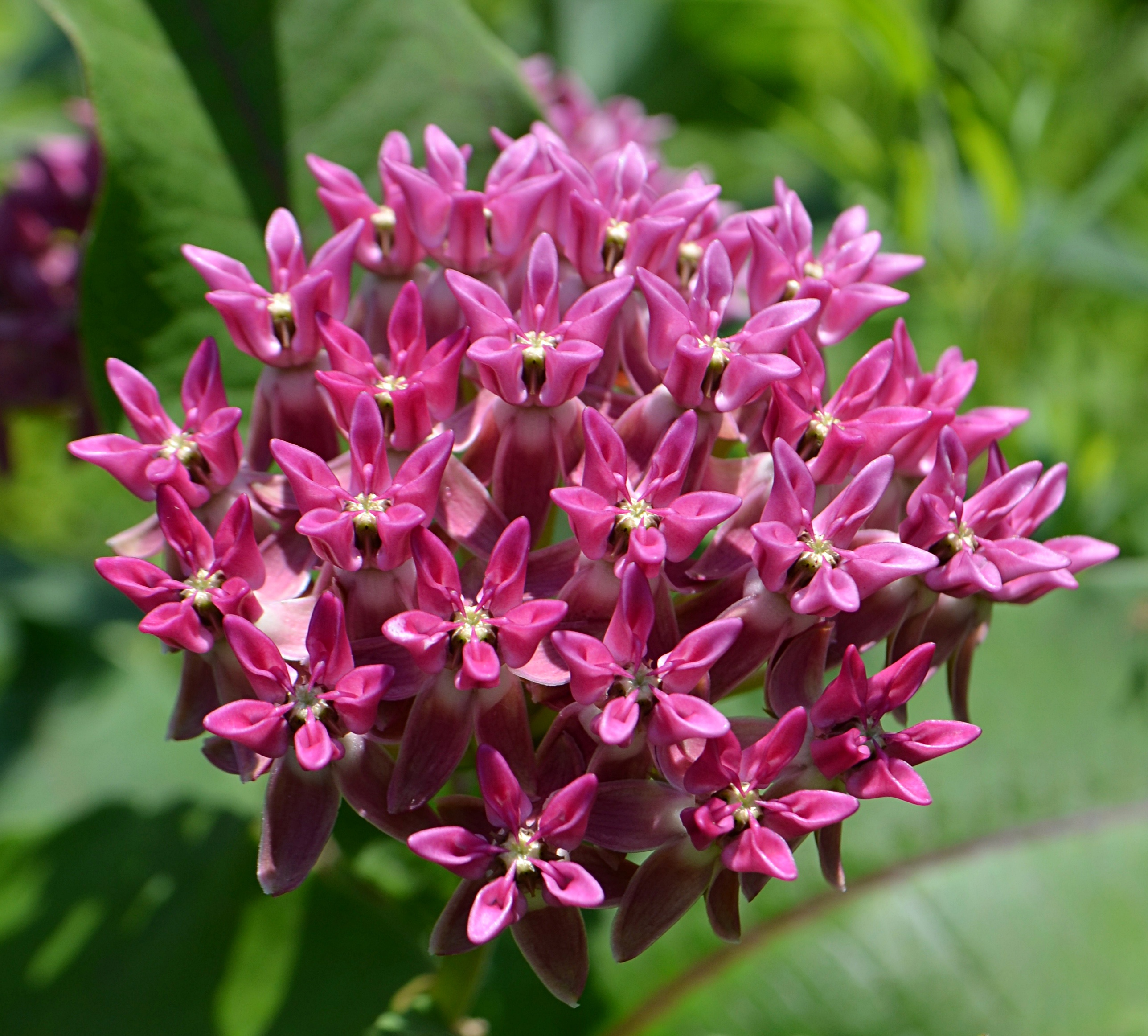
Native Range: AR, CT, DC, DE, GA, IA, IL, IN, KS, KY, LA, MA, MD, MI, MN, MO, MS, NC, NE, NH, NJ, NY, OH, OK, PA, RI, SD, TN, TX, VA, WI, WV. See USDA Plants map for county-level occurrence of the species.
Description: The flowers of this beautiful milkweed species are rich magenta-purple and bloom May to July.
Growing Conditions: Needs sunlight and dry soil
Plant Size: 2-4 ft (61 to 122 cm)
Showy Milkweed (Asclepias speciosa)
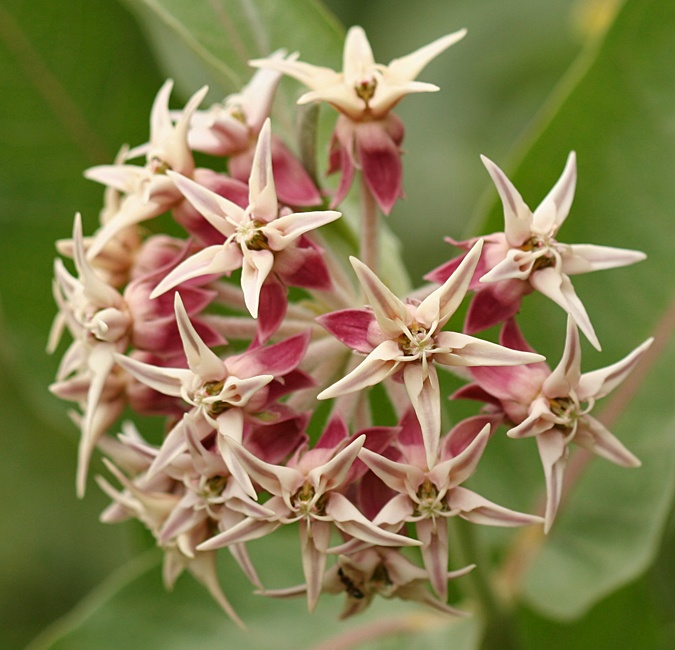
Native Range: AZ, CA, CO, IA, ID, IL, KS, MI, MN, MT, ND, NE, NM, NV, OK, OR, SD, TX, UT, WA, WI, WY. See USDA Plants map for county-level occurrence of the species.
Description: This perennial has large, oval, blue-green leaves and spherical clusters of rose-colored flowers. The flowers occur at the top of the stem and on stalks from leaf axils and bloom May to September.
Growing Conditions: Shade intolerant, needs sunlight, medium water use, moist soil
Plant Size: Generally 1 ½ – 3 ft (46 – 91 cm) but can reach 6 ft (183 cm) under favorable conditions
California Milkweed (Asclepias californica)
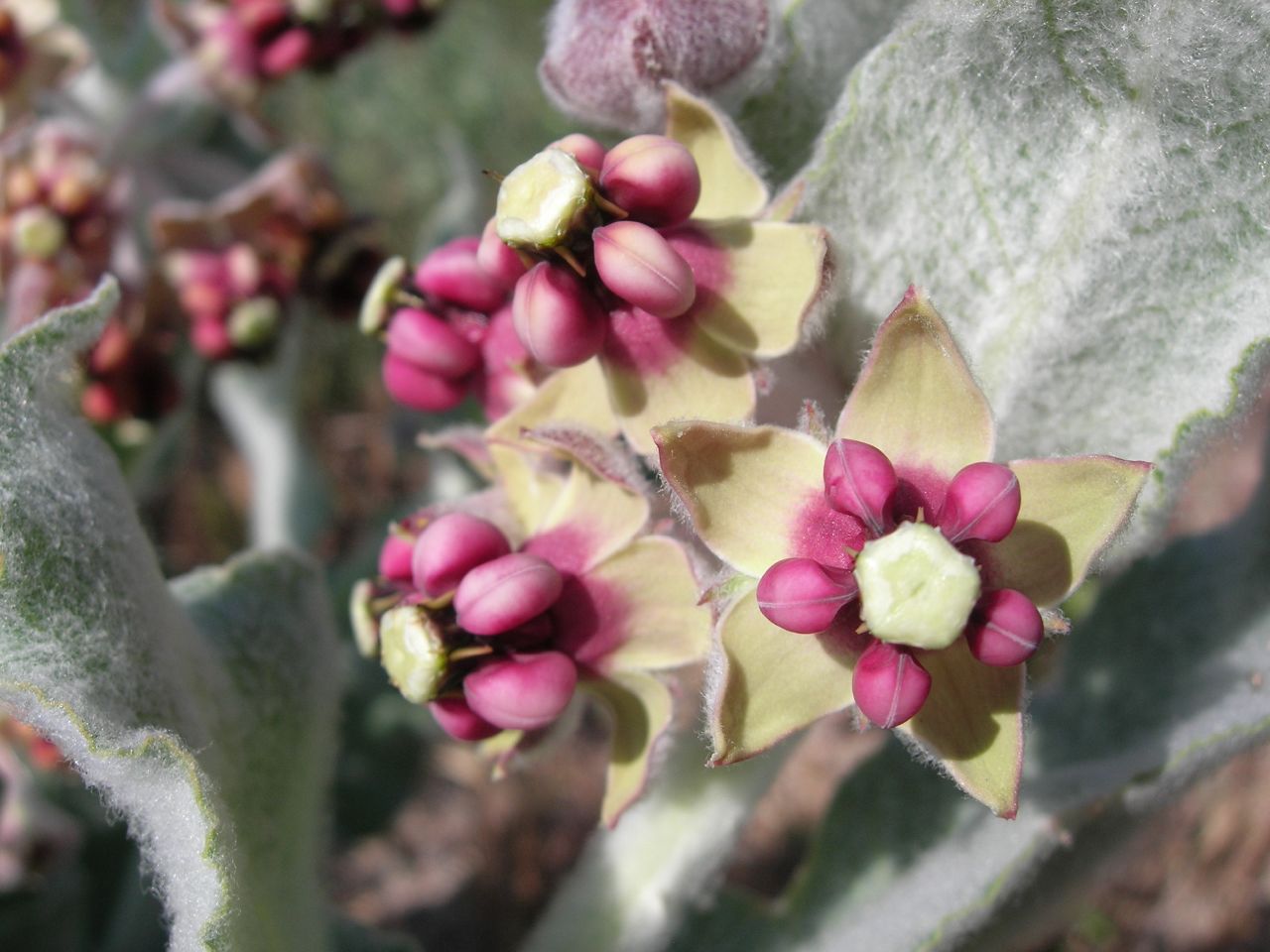
Native Range: Central and southern California. See USDA Plants map for county-level occurrence of the species.
Description: This perennial is a white-woolly plant with milky sap and deep purple flowers. It blooms May to July.
Growing Conditions: Drought tolerant, dry slopes
Plant Size: Maximum height 3 ft (91 cm)
Woollypod Milkweed (Asclepias eriocarpa)

Native Range: CA and adjacent parts of NV and Baja California. See USDA Plants map for county-level occurrence of the species.
Description: This perennial has small white flowers with pink and pale yellow centers. The stems of the plant are covered in fine white hairs, which are even longer on the seed pods, giving it its common name. Blooms May to October.
Growing Conditions: Dry soil, full sun
Plant Size: 1-3 ft (30- 91 cm)
Whorled milkweed (Asclepias verticillata)
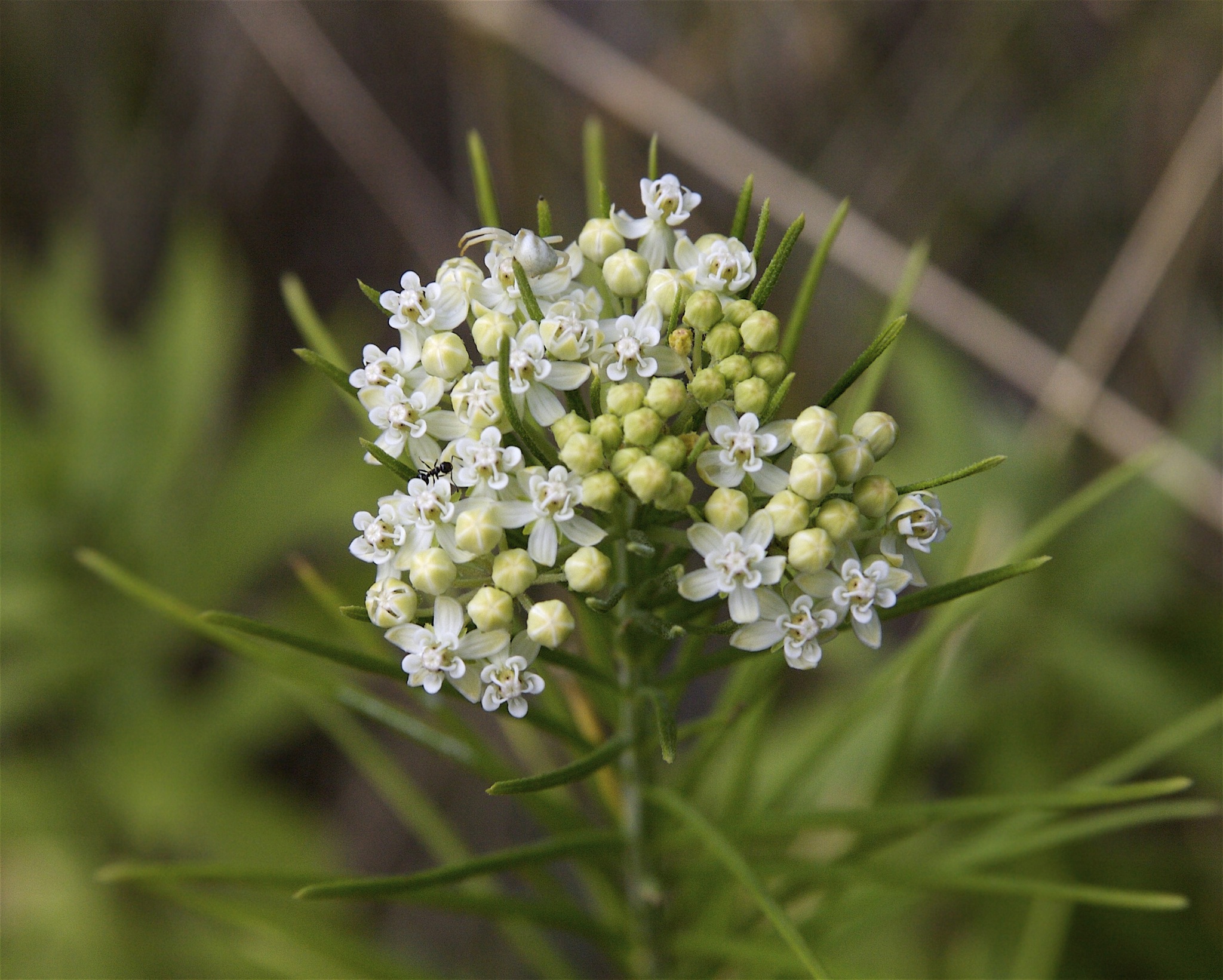
Native Range: AL, AR, AZ, CT, DC, DE, FL, GA, IA, IL, IN, KS, KY, LA, MA, MD, MI, MN, MO, MS, MT, NC, ND, NE, NJ, NM, NY, OH, OK, PA, RI, SC, SD, TN, TX, VA, VT, WI, WV, WY. See USDA Plants map for county-level occurrence of the species.
Description: This single-stemmed perennial has narrow, linear leaves whorled along the stem. Small, greenish-white flowers occur in flat-topped clusters on the upper part of the stem and bloom May to September.
Growing Conditions: Low water use, moderately shade tolerant, dry soil
Plant Size: 1-3 ft (30- 91 cm)
Mexican Whorled Milkweed (Asclepias fascicularis)
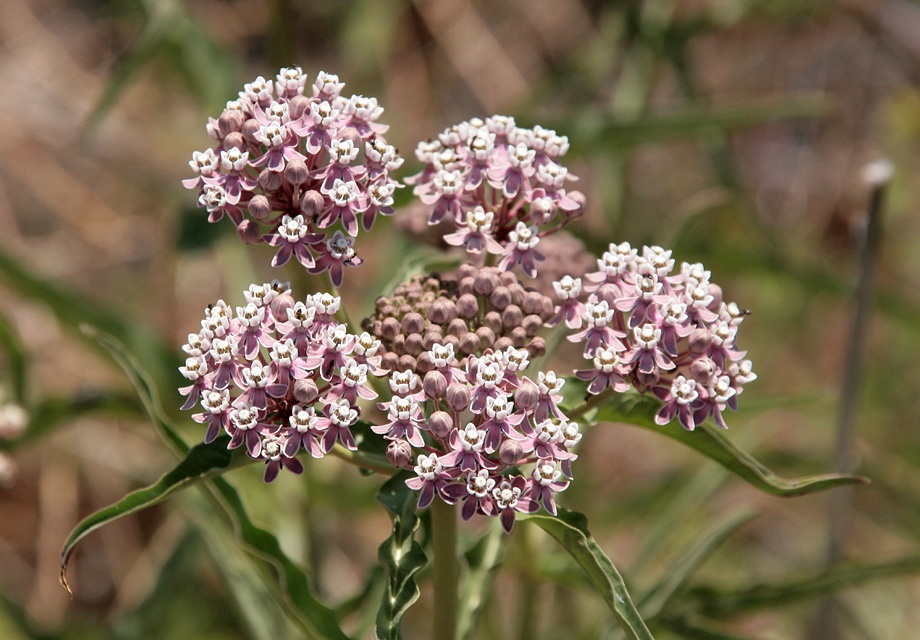
Native Range: CA, ID, NV, OR, UT, WA. See USDA Plants map for county-level occurrence of the species.
Description: Also known as narrowleaf milkweed, this perennial has narrow, whorled leaves with clusters of greenish-white flowers, often tinged with purple and blooms June to September.
Growing Conditions: Needs sunlight, drought tolerant, dry to moist soils
Plant Size: 1-2½ ft (30-76 cm)
Desert Milkweed (Asclepias erosa)
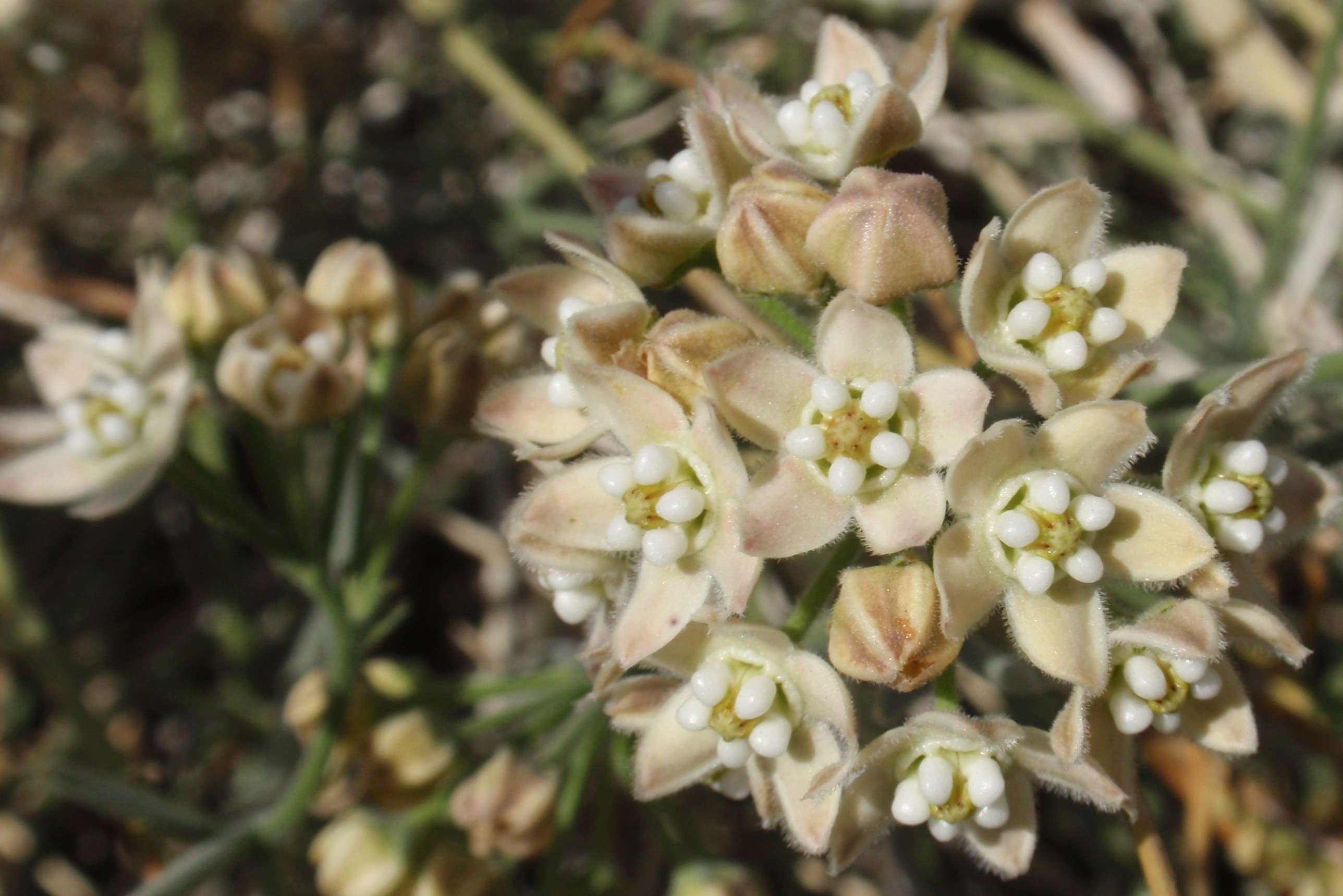
Native Range: AZ, CA, NV, UT. See USDA Plants map for county-level occurrence of the species.
Description: Desert milkweed has white to yellow flowers and a green to yellow stem and blooms April to October. Identification is somewhat difficult because its leaves vary from mostly smooth to covered with fine cream-colored hair.
Growing Conditions: Best grown in deserts or desert conditions with sandy soils, needs sunlight, dry soils, not shade tolerant
Plant Size: 1-3 ft (30- 91 cm)
Green Milkweed (Asclepias viridis)
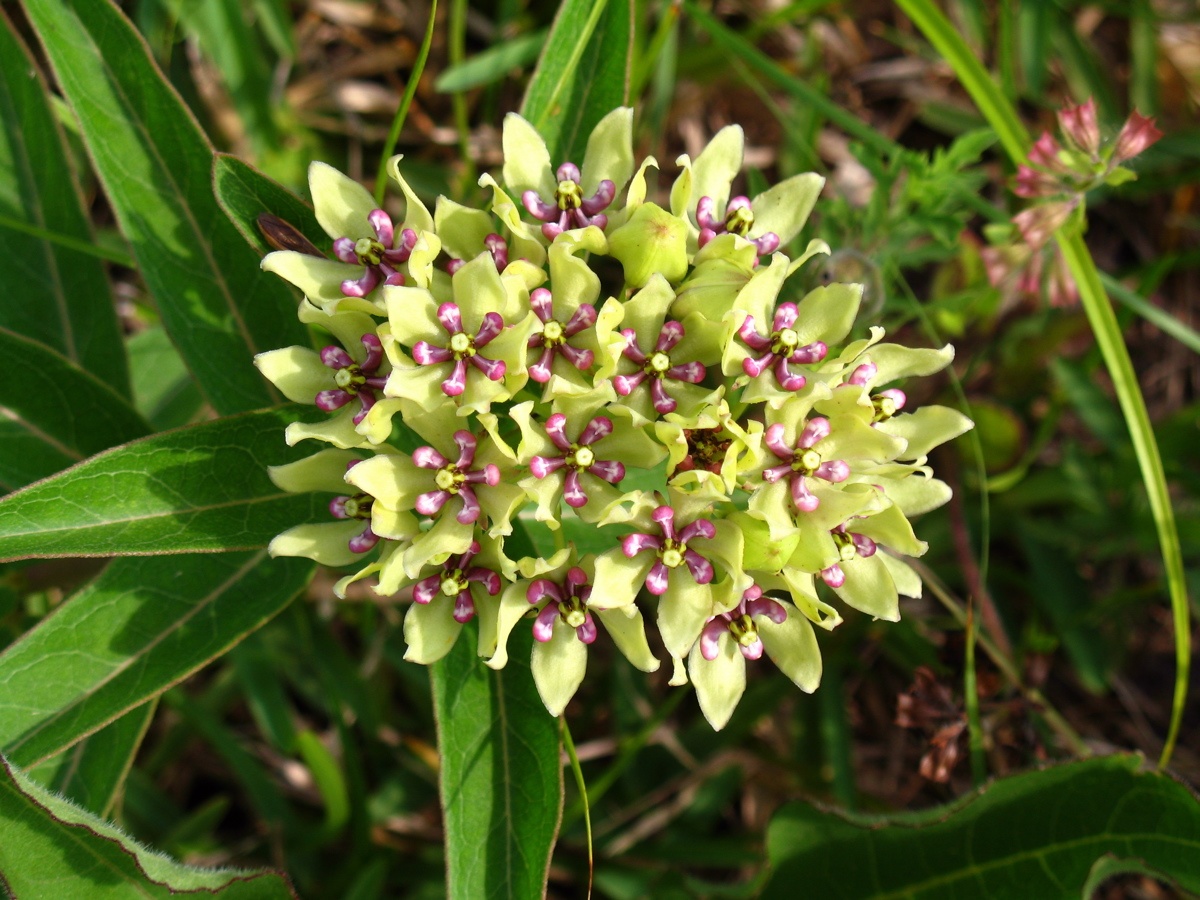
Native Range: AL, AR, FL, GA, IL, IN, KS, KY, LA, MO, MS, NE, OH, OK, SC, TN, TX, WV. See USDA Plants map for county-level occurrence of the species.
Description: Also known as green antelopehorn milkweed, this perennial has white flowers – mostly one per plant and lacks the “horns” seen on antelopehorn milkweed. These milkweeds bloom from May to August.
Growing Conditions: Needs sunlight, cold and heat tolerant, moist soil, low water use
Plant Size: Matures to 4 ft (122 cm) in height
Don’t Plant Non-Native Milkweed
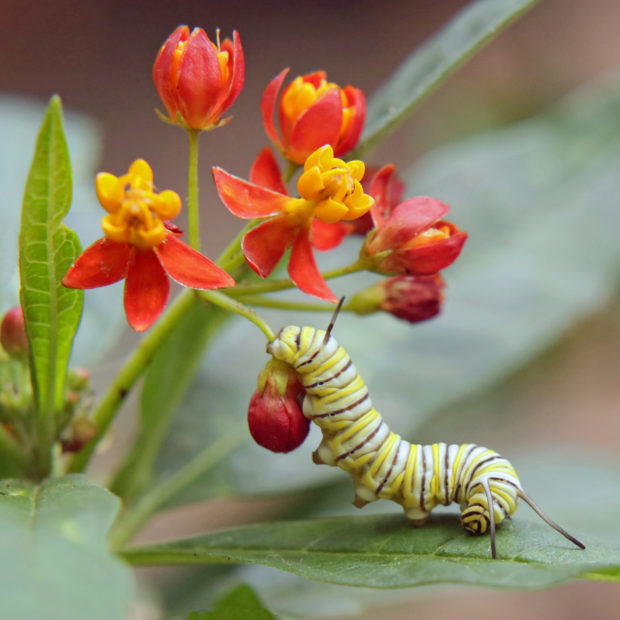
The twelve native milkweed species listed above are just a few of the dozens that are native to North America. In addition to native milkweeds, one of the most commonly available milkweeds in the garden trade is tropical milkweed (Asclepias curassavica), pictured above, which unfortunately can be problematic for monarchs by potentially spreading disease and disrupting migration (see this fact sheet on tropical milkweed).
Recently another tropical species called blue milkweed vine (Tweedia caerulea or Oxypetalum coeruleum) is growing in popularity and being promoted in the garden trade, but its impact on monarchs is totally unknown.
At the National Wildlife Federation, we recommend sticking with native milkweed species that monarchs co-evolved with and which we know will have a positive impact. Luckily, there are many beautiful native milkweeds from which to choose!
More Resources
Now that you’ve met some milkweed species, here are even more resources from the National Wildlife Federation:
- Milkweeds for Monarchs
- Nectar Plants for Monarchs
- Caterpillar Host Plants by Region
- Native Keystone Plants to Support Pollinators, Birds and Other Wildlife
- Native Plant Finder
- Mayors’ Monarch Pledge
 Written by Abby Barber
 Written by David Mizejewski
